Weingut Clemens Busch
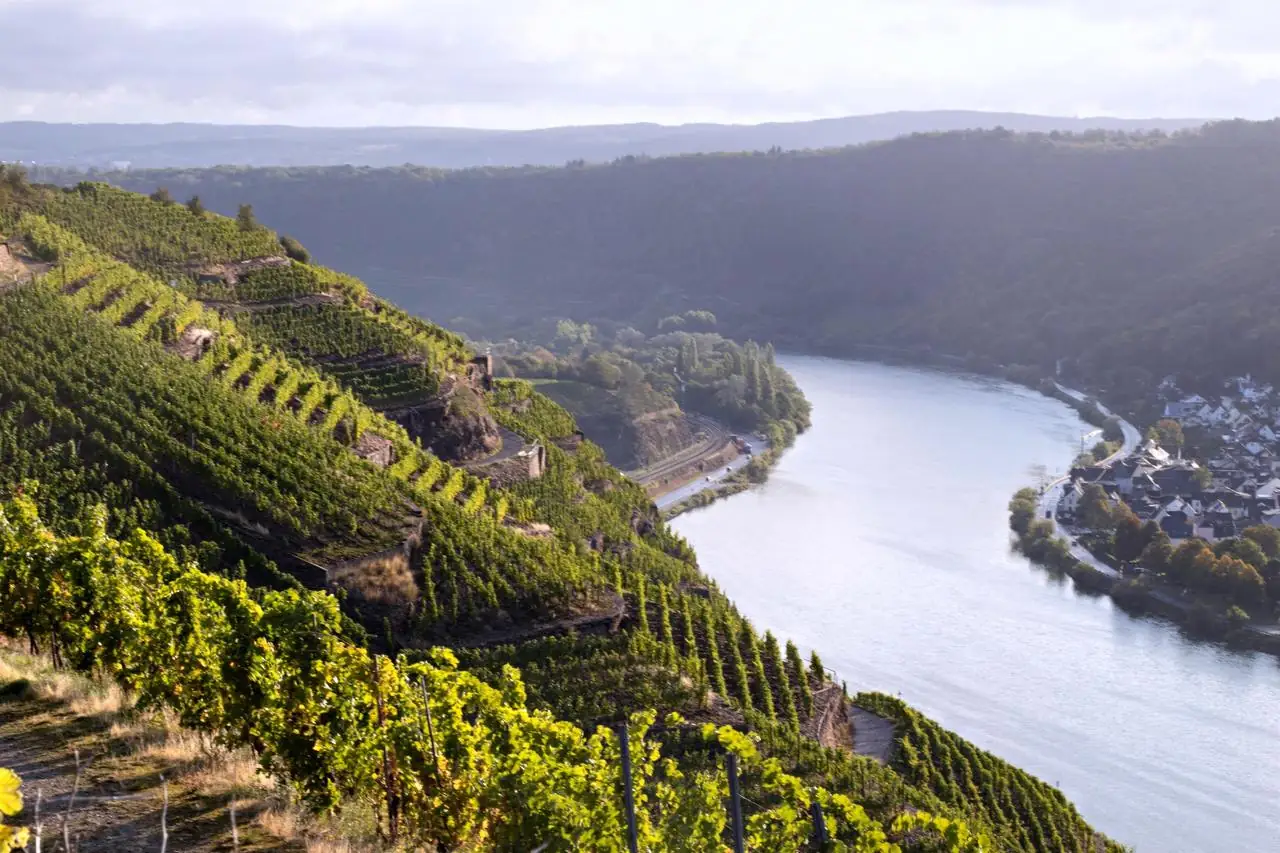
The Terrassenmosel — the steep southern section of the Mosel above Cochem — is among the most physically demanding wine regions in Europe. The blue Devon slate terraces here cannot be farmed by machine; every operation requires a person on the slope, often on a gradient that would be considered a climbing challenge rather than an agricultural site. Clemens Busch has been farming this way under certified organic and Respekt-Biodyn biodynamic standards since 1984, before the modern organic wine movement had developed the vocabulary to celebrate what he was doing.
The estate's holdings are concentrated on the Marienburg — a single south-facing hillside in Pünderich whose multiple exposures, slate variations, and altitude differences allow Busch to produce a series of site-specific Rieslings that function as a geological map of a single mountain. The Fahrlay, Rothenpfad, and Felsterrasse bottlings are among the most precise terroir documents available in German wine.
The wines have drawn 98 points from both Wine Advocate and James Suckling — marks that place Clemens Busch at the very top of the Mosel's quality hierarchy alongside estates with far greater name recognition. The farming record is longer and more comprehensive than almost any of them.
These are not easy wines to find outside Germany, which means the people who do find them tend to hold onto them.